
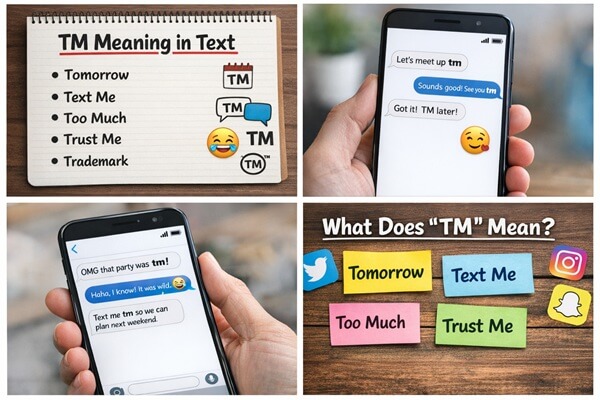
You ever open a message, see “tm”, and pause for a second like, “Okay… what does that mean here?” Same. I’ve had moments where I confidently replied, only to realize later that I completely misunderstood the vibe. Awkward, but also kind of funny in hindsight.
If you’re here to figure out the TM meaning in text, you’re not alone. This tiny two letter combo pops up everywhere, from casual chats to social media captions to brand names. The tricky part is that TM doesn’t mean just one thing. Context decides everything, and I’ll break it all down in plain language so you never have to guess again.
Contents
- 1 Why “TM” Confuses So Many People
- 2 The Most Common TM Meaning in Texting
- 3 TM = Text Me
- 4 TM = Too Much
- 5 TM = Trust Me
- 6 TM as a Trademark Symbol (The Formal Meaning)
- 7 How Context Changes Everything
- 8 TM on Social Media vs Text Messages
- 9 TM in Professional vs Casual Settings
- 10 Why People Love Using “TM”
- 11 Common TM Misunderstandings (And How to Avoid Them)
- 12 TM Compared to Similar Slang
- 13 How to Use TM Correctly in Your Own Messages
- 14 Does TM Mean the Same Thing Worldwide?
- 15 Why TM Keeps Evolving
- 16 Quick Cheat Sheet: TM Meaning in Text
- 17 Final Thoughts on TM Meaning in Text
Why “TM” Confuses So Many People
Let’s start with the obvious. TM looks simple, but it carries multiple meanings depending on how and where someone uses it. That’s why it trips people up.
Ever noticed how texting shortcuts change meaning based on tone or timing? TM works the same way. One message can mean tomorrow, another can mean text me, and another can mean something totally different.
The Most Common TM Meaning in Texting
When people ask about tm meaning in text, they usually mean casual messaging, not legal stuff. So let’s start there.
TM = Tomorrow
This is hands down one of the most common uses.
People type tm instead of tomorrow because typing less feels efficient. Laziness wins again.
Examples:
-
“Let’s talk tm”
-
“Meeting tm morning?”
-
“I’ll send the details tm”
If the message talks about time, plans, or future actions, TM almost always means tomorrow. Ever had someone say “tm” and you instantly knew they meant tomorrow? Your brain already learned this one.
TM = Text Me
Here’s another popular meaning that shows up in casual chats.
When someone writes TM, they sometimes mean “text me.” This usually appears when someone wants to continue a conversation later or move it off another platform.
Examples:
-
“I’m busy rn, tm later”
-
“Got questions, tm when free”
Context matters here. If the conversation already happens in text form, TM often means text me later. Simple, right?
TM = Too Much
Now we move into reaction slang territory.
People use TM to mean “too much”, especially on social media or in expressive messages. This version usually reacts to drama, excitement, or something over the top.
Examples:
-
“That ending was tm”
-
“This drama is tm”
IMO, this version shows personality more than information. You’ll spot it when someone reacts emotionally rather than scheduling something.
TM = Trust Me
This meaning shows up less often, but people still use it.
Some folks use TM as shorthand for “trust me.” This usually appears when someone tries to convince or reassure someone else.
Examples:
-
“That place is amazing tm”
-
“You’ll love it tm”
If someone sounds persuasive or confident, TM likely means trust me. Ever notice how people shorten phrases when they want to sound casual but confident? That’s exactly what’s happening here.
TM as a Trademark Symbol (The Formal Meaning)
Now let’s switch gears.
Outside texting slang, TM means “trademark.” This usage has nothing to do with chatting and everything to do with branding.
When you see ™, it shows that someone claims rights to a brand name, slogan, or logo. People often type TM instead of using the symbol when formatting doesn’t cooperate.
Key points about trademark TM:
-
It doesn’t require official registration
-
Businesses use it to claim ownership
-
It appears next to brand names, not sentences
Ever see a brand name followed by TM and wonder why it’s there? That’s legal language sneaking into everyday life.
How Context Changes Everything
Here’s the golden rule.
TM never stands alone without context. The surrounding words decide the meaning every time.
Ask yourself:
-
Are they talking about time? → Tomorrow
-
Are they asking for contact? → Text me
-
Are they reacting emotionally? → Too much
-
Are they convincing you? → Trust me
-
Are they branding something? → Trademark
Once you start asking these questions, TM stops feeling confusing.
TM on Social Media vs Text Messages
TM behaves differently depending on platform.
On Social Media
-
Often means too much
-
Sometimes means trust me
-
Rarely means tomorrow unless scheduling
In Text Messages
-
Often means tomorrow
-
Sometimes means text me
-
Rarely means trademark
Ever notice how tone changes depending on where you read something? Same letters, totally different energy.
TM in Professional vs Casual Settings
This distinction matters more than people think.
In casual chats, TM stays playful and flexible.
In professional or branding contexts, TM almost always means trademark.
If someone drops TM in a work email next to a product name, they’re not talking about tomorrow. They’re talking about ownership.
Why People Love Using “TM”
People don’t shorten words randomly. TM sticks because it saves time and fits multiple situations.
Here’s why people keep using it:
-
Fast to type
-
Context-friendly
-
Feels casual
-
Works across platforms
FYI, this versatility explains why TM never really goes out of style.
Common TM Misunderstandings (And How to Avoid Them)
Let’s talk about mistakes because we’ve all made them.
Misreading “tm” as trademark
This happens a lot in text conversations. If someone says “see you tm,” they definitely don’t mean trademark.
Assuming “tm” means tomorrow every time
Sometimes TM means text me, not tomorrow. If timing doesn’t make sense, rethink it.
Ignoring tone
Tone solves half the mystery. Emotional tone usually points to too much or trust me.
Ever replied confidently and realized you misunderstood the meaning five minutes later? Yeah… same :/
TM Compared to Similar Slang
TM sits alongside other short forms that rely heavily on context.
Similar abbreviations include:
-
IDK – I don’t know
-
TBH – to be honest
-
BRB – be right back
-
IMO – in my opinion
TM feels trickier because it doesn’t lock into one meaning. That flexibility makes it useful and confusing at the same time.
How to Use TM Correctly in Your Own Messages
If you plan to use TM yourself, clarity helps.
Tips for using TM
-
Use it when context already exists
-
Avoid it in unclear conversations
-
Don’t use it in formal writing unless you mean trademark
When in doubt, spell it out. Two extra seconds can save a misunderstanding.
Does TM Mean the Same Thing Worldwide?
Mostly, yes, but not always.
English-speaking regions use TM in similar ways, especially for tomorrow and text me. Slang meanings like too much appear more often in online communities than in everyday texting.
Language evolves fast online, so meanings shift depending on trends and platforms.
Why TM Keeps Evolving
Slang adapts to speed and convenience. TM survives because it does both well.
As long as people want faster conversations, abbreviations like TM will keep changing meaning slightly. That’s part of the fun.
Ever notice how new slang feels confusing at first and obvious later? TM went through that same cycle.
Quick Cheat Sheet: TM Meaning in Text
Here’s a simple breakdown you can remember.
-
Tomorrow – scheduling or future plans
-
Text me – follow-up or contact request
-
Too much – emotional or dramatic reaction
-
Trust me – reassurance or persuasion
-
Trademark – branding or legal usage
If you remember this list, TM won’t catch you off guard again.
Final Thoughts on TM Meaning in Text
TM might look tiny, but it carries a lot of meaning packed into two letters. Once you understand how context shapes its use, everything clicks.
Next time someone sends you “tm,” you won’t overthink it or guess wildly. You’ll read the room, catch the tone, and respond like a pro. And honestly, that’s one less small confusion in a world full of them.