
Contents
- 1 Introduction
- 2 What Does SYBAU Mean?
- 3 Origin of SYBAU Slang
- 4 How SYBAU Is Used Online
- 5 SYBAU in Text Messages
- 6 Is SYBAU Rude or Offensive?
- 7 Real-Life Examples of SYBAU Usage
- 8 How People Use SYBAU in Real Life
- 9 Tips Before Using SYBAU
- 10 Common Mistakes People Make
- 11 Related Slang Terms to SYBAU
- 12 Frequently Asked Questions
- 13 Conclusion
Introduction
What does SYBAU mean, and why are so many people searching for it online?
If you’ve seen “SYBAU” pop up in texts, comments, or social media replies and felt confused, you’re not alone. Internet slang moves fast, and new abbreviations can feel impossible to keep up with.
SYBAU is one of those slang terms that looks harmless at first but carries a strong tone depending on how it’s used. People often search for its meaning because it shows up in heated conversations, jokes, or blunt online replies.
In this guide, we’ll break down the SYBAU slang meaning in simple words. You’ll learn where it came from, how people use it, what it really implies, and how to respond when someone throws it your way.
What Does SYBAU Mean?
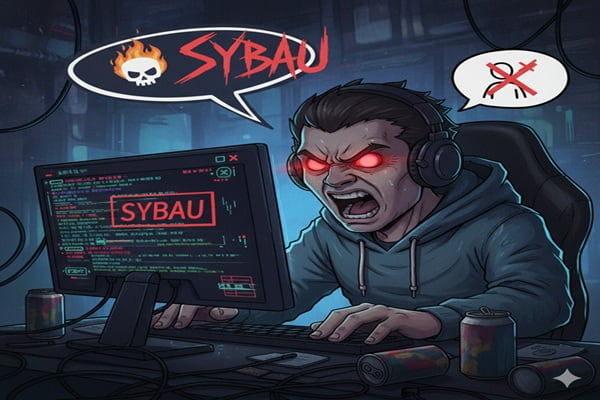
SYBAU is a slang acronym that stands for “Shut Your B A Up.”
It’s a very direct and often rude way to tell someone to stop talking.
The term is usually used online rather than spoken out loud.
It appears mostly in texts, comment sections, and social media replies.
Its tone can range from joking to aggressive, depending on context.
Most of the time, it’s considered disrespectful or confrontational.
Because of its harsh wording, SYBAU isn’t something you’d use casually with everyone.
Origin of SYBAU Slang
SYBAU originated from online culture where shortening insults into acronyms became common.
People often use abbreviations to avoid moderation filters.
It also softens the visual impact of explicit language.
The phrase gained traction in meme culture and comment sections.
Over time, it became recognizable enough to stand alone as SYBAU.
Its spread was driven by fast-moving platforms where short replies matter.
How SYBAU Is Used Online
SYBAU is usually used as a reaction, not a conversation starter.
It often appears during arguments or sarcastic exchanges.
Some people use it jokingly with close friends.
Others use it to shut down opinions they disagree with.
The meaning depends heavily on tone and relationship.
In public spaces, it’s usually taken as hostile.
SYBAU in Text Messages
In private chats, SYBAU can still feel harsh.
Friends may use it playfully, but context matters a lot.
Without tone or emojis, it can sound aggressive.
Many misunderstandings come from text-only usage.
It’s best avoided unless you’re sure it’s taken as a joke.
Text messages don’t always carry emotional nuance.
Is SYBAU Rude or Offensive?
Yes, SYBAU is generally considered rude.
It contains an insult even though it’s abbreviated.
Most people wouldn’t use it in polite conversation.
It can escalate arguments quickly.
Some platforms may flag or remove it.
Even when joking, it can easily cross a line.
Real-Life Examples of SYBAU Usage
-
“Bro, SYBAU, I’m trying to watch the game.”
-
“SYBAU you know that’s not true.”
-
“If you don’t like it, SYBAU.”
-
“Someone really replied SYBAU to my comment.”
-
“He said SYBAU and left the chat.”
-
“That reply was basically a SYBAU moment.”
-
“People use SYBAU when they’re mad online.”
-
“She meant it as a joke, but it sounded rude.”
-
“SYBAU isn’t the best way to win an argument.”
-
“I thought SYBAU was harmless slang.”
-
“That SYBAU comment got deleted.”
-
“Using SYBAU in public threads is risky.”
-
“Friends joked with SYBAU all the time.”
-
“SYBAU ended the conversation instantly.”
-
“He typed SYBAU and blocked me.”
-
“Some see SYBAU as playful trash talk.”
-
“Others take SYBAU very seriously.”
-
“SYBAU showed how annoyed he was.”
-
“I didn’t expect a SYBAU response.”
-
“That escalated quickly with SYBAU.”
How People Use SYBAU in Real Life
People use SYBAU to shut down conversations quickly.
It’s common in online arguments and comment fights.
Some use it sarcastically with close friends.
Others use it to express frustration instantly.
It’s rarely used in professional or polite spaces.
Most real-life use stays online rather than spoken.
Tips Before Using SYBAU
Know your audience before using it.
Avoid using it with strangers.
Remember that tone doesn’t translate well in text.
Consider less aggressive alternatives.
When in doubt, don’t use it.
Using SYBAU can damage conversations fast.
Also Read : Glarklyhub Platform Guide for Creative Collaboration & Innovation
Common Mistakes People Make
Thinking SYBAU is harmless slang.
Using it without understanding the tone.
Sending it to someone who doesn’t joke that way.
Using it in public or professional spaces.
Assuming everyone interprets it the same way.
Context changes everything with slang.
Related Slang Terms to SYBAU
STFU – Another direct way to tell someone to be quiet.
GTFO – Used to dismiss someone strongly.
IDC – Shows disinterest rather than aggression.
BRUH – Expresses disbelief, sometimes sarcastic.
SMH – Indicates disappointment without insults.
These terms vary in intensity and tone.
Frequently Asked Questions
What does SYBAU stand for?
It stands for “Shut Your B A Up.”
Is SYBAU always offensive?
Most of the time, yes, but context matters.
Can SYBAU be used jokingly?
Yes, but only among close friends who understand the tone.
Is SYBAU allowed on social media?
Some platforms may flag or remove it.
Should I respond if someone says SYBAU to me?
Often it’s better to ignore or de-escalate.
Conclusion
SYBAU is a short slang term with a strong message behind it. While it may look like just another internet acronym, its meaning is direct and often confrontational.
Understanding what SYBAU means helps you avoid misunderstandings and respond wisely. Whether you see it online or in a text, knowing the context can make all the difference. Use slang carefully, and choose words that keep conversations respectful whenever possible.