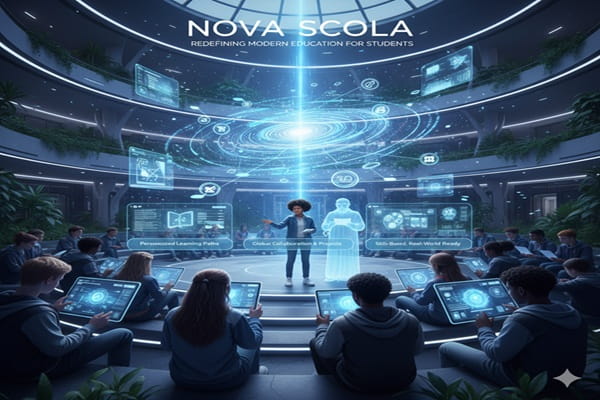
Ever feel like traditional schooling is stuck in a time warp? You know, the same old lectures, textbooks, and endless standardized tests? Yeah, me too. That’s exactly why Nova Scola caught my eye and honestly, it’s shaking up the way we think about education. This isn’t your typical “let’s memorize facts” kind of approach. Nova Scola is all about learning that actually prepares you for life, not just the next exam.
If you’re curious about what makes this new educational philosophy so exciting, grab a coffee and let’s chat. I’ll break it down for you in a way that’s as approachable as a conversation between friends plus, a little sarcasm here and there just to keep it real 🙂
Contents
- 1 What Is Nova Scola?
- 2 The Philosophy Behind Nova Scola
- 3 How Nova Scola Stands Out From Traditional Education
- 4 Key Features of Nova Scola
- 5 A Day in the Life of a Nova Scola Student
- 6 Why Critical Thinking Comes First
- 7 Benefits of the Nova Scola Approach
- 8 Teachers as Mentors, Not Lecturers
- 9 How Nova Scola Prepares Students for a Changing World
- 10 Challenges and Considerations
- 11 Nova Scola vs Traditional Schooling: Quick Recap
- 12 Why Nova Scola Matters Today
- 13 Final Thoughts
What Is Nova Scola?
At its core, Nova Scola literally means “new school.” But don’t let the simple name fool you. This is more than a rebranding of classrooms it’s a complete rethinking of how learning should happen in the 21st century.
Unlike traditional schools that focus on memorization and test scores, Nova Scola emphasizes:
-
Critical thinking
-
Creativity
-
Collaboration
-
Real-world skills
Basically, it’s about preparing learners for life, not just exams. And honestly, isn’t that what we all want for ourselves or our kids?
The Philosophy Behind Nova Scola
Nova Scola isn’t just about new textbooks or fancy technology; it’s a holistic philosophy that looks at the student as a whole person.
Student-Centered Learning
Here, the focus is on each student’s unique strengths, interests, and learning styles. Instead of expecting everyone to fit into one mold, Nova Scola adapts to the learner.
Project-Based and Experiential Learning
Forget boring lectures students tackle real-world projects, solve actual problems, and collaborate with peers to develop solutions. Ever wondered why students sometimes seem disengaged? This approach keeps them active and curious.
Mentorship Over Authority
Teachers at Nova Scola are more like guides or mentors than strict authority figures. They encourage exploration, guide discussions, and help students reflect on their learning journey.
How Nova Scola Stands Out From Traditional Education
Let’s face it: traditional schooling has its perks, but it’s not always practical in today’s fast-moving world. Here’s a quick side-by-side comparison:
| Aspect | Traditional Schooling | Nova Scola |
|---|---|---|
| Focus | Memorization & exams | Critical thinking & creativity |
| Assessment | Standardized tests | Portfolios, projects, reflections |
| Teacher Role | Authority figure | Mentor & facilitator |
| Learning Style | Passive listening | Active, personalized engagement |
| Technology | Supplementary | Integrated for real-world skills |
See the difference? One prepares students for tests, the other prepares them for life.
Key Features of Nova Scola
So what actually happens day-to-day in a Nova Scola classroom? Let’s break it down.
1. Personalized Learning Paths
No more “one size fits all.” Each student follows a learning journey that fits their strengths, interests, and pace. This keeps learners engaged and motivated, because they’re not forced into irrelevant topics.
2. Real-World Applications
Students work on projects that connect with their communities and the wider world. This means learning math by budgeting for a community project or exploring science through environmental challenges.
3. Collaborative Learning
Instead of competing for grades, students work together on projects, learn from one another, and share feedback. This builds teamwork and interpersonal skills something traditional schools often overlook.
4. Critical Thinking & Creativity
Students are encouraged to ask questions, analyze problems, and propose innovative solutions. Creativity isn’t just a side activity; it’s integrated into daily learning.
5. Emotional Intelligence & Well-Being
Nova Scola acknowledges that emotions affect learning. Programs focus on resilience, empathy, and social skills, making students well-rounded individuals.
A Day in the Life of a Nova Scola Student
Ever wonder what a student’s day looks like here? Let’s walk through a typical schedule:
-
Morning Reflection & Planning: Students set goals and discuss challenges.
-
Project Time: Hands-on work that applies lessons to real-world situations.
-
Mentorship Sessions: Personalized guidance with a teacher or mentor.
-
Collaboration Workshops: Teams brainstorm and problem-solve.
-
Reflection & Feedback: Students review what they learned and how they can improve.
It’s not just productive; it’s engaging, purposeful, and fun. You might even wish you could go back to school here 🙂
Why Critical Thinking Comes First
One of the biggest complaints about traditional education is that it focuses too much on memorizing facts. Nova Scola changes that by putting critical thinking at the center. Students learn to:
-
Analyze information
-
Connect ideas across subjects
-
Solve real-life problems
-
Innovate and adapt
It’s like training the mind for life’s curveballs rather than just memorizing dates in history.
Also Read : CJMonsoon: The Digital Identity Taking Online Creativity by Storm
Benefits of the Nova Scola Approach
Nova Scola doesn’t just sound good on paper it actually delivers results. Here’s what makes it special:
-
Higher Engagement: Students are excited to learn because it’s meaningful and relevant.
-
Better Academic and Life Skills: Communication, leadership, and problem-solving skills are emphasized.
-
Emotional & Social Growth: Focus on resilience, empathy, and collaboration prepares students for the real world.
-
Preparedness for the Future: Students graduate with skills that are adaptable in any environment.
Honestly, it’s the kind of education that makes you think, “Why didn’t we have this growing up?”
Teachers as Mentors, Not Lecturers
One of the biggest shifts in Nova Scola is the teacher’s role. Instead of standing in front of the class and lecturing for hours, teachers:
-
Facilitate discussions
-
Guide projects
-
Offer personalized feedback
-
Inspire students to explore new ideas
It’s more coaching than commanding, which creates a supportive learning environment and encourages self-directed growth.
How Nova Scola Prepares Students for a Changing World
We live in a fast-paced, globalized, and tech-driven world. Nova Scola ensures that learners are ready for:
-
Digital literacy and ethical technology use
-
Cross-cultural collaboration
-
Lifelong learning habits
-
Adaptability and problem-solving in unpredictable situations
In other words, students aren’t just getting a degree they’re gaining life skills.
Challenges and Considerations
No model is perfect, and Nova Scola does face some challenges:
-
Teacher Training: Teachers need skills to facilitate rather than lecture.
-
Access to Technology: Not every student has equal access.
-
Assessment Changes: Traditional grading systems don’t always fit.
-
Funding & Equity: Implementing such models can require more resources.
Still, these challenges aren’t dealbreakers. They’re opportunities to reimagine education for everyone.
Nova Scola vs Traditional Schooling: Quick Recap
-
Focus: Memorization vs. critical thinking
-
Assessment: Tests vs. projects and portfolios
-
Teacher Role: Authority vs. mentor
-
Learning Style: Passive vs. active and personalized
-
Tech Use: Supplementary vs. integrated
If you’re looking at education for the future, Nova Scola clearly has the edge.
Why Nova Scola Matters Today
Education shapes society. If schools aren’t evolving, neither are students. Nova Scola responds to:
-
Rapid technological changes
-
The need for adaptable skills
-
Mental health and social-emotional growth
-
Global connectivity and collaboration
It’s not just a new school; it’s a new philosophy for preparing students for life.
Final Thoughts
At the end of the day, Nova Scola is about unlocking human potential. It’s a place where curiosity is encouraged, mistakes are learning opportunities, and students are prepared to thrive in a complex, ever-changing world.
Personally, I find it inspiring. I mean, who wouldn’t want to go back to a school that’s engaging, meaningful, and fun? If you care about education whether as a parent, teacher, or lifelong learner Nova Scola is worth paying attention to.
So, what do you think? Could this be the future of learning? IMO, it’s about time we made school a place we actually look forward to.