
Ever stumble on a word that sounds futuristic, slightly mysterious, and oddly practical at the same time? That’s exactly how Autoamina landed on my radar. I first saw it pop up in a tech-auto discussion, shrugged, and thought, “Okay, another buzzword?” Then I kept seeing it. Different sites. Different contexts. Same core idea. And suddenly, Autoamina started to make sense.
If you’re here because you’re curious, confused, or just want a straight-talk explanation without the corporate blah-blah, relax you’re among friends. Let’s break Autoamina down like we would over coffee.
Contents
- 1 What Is Autoamina, Really?
- 2 Why Autoamina Is Getting Attention
- 3 Autoamina in the Automotive World
- 4 Autoamina as a Self-Regulation Concept
- 5 Autoamina and Technology
- 6 Autoamina and Human Balance
- 7 Why Autoamina Feels Modern
- 8 Autoamina vs Traditional Automation
- 9 Key Features Commonly Linked to Autoamina
- 10 Personal Take: Why I Like the Autoamina Idea
- 11 Where Autoamina Shows Up Online
- 12 Is Autoamina a Brand or a Concept?
- 13 SEO Perspective: Why Autoamina Performs Well
- 14 Misconceptions About Autoamina
- 15 How Autoamina Fits the Future
- 16 Should You Care About Autoamina?
- 17 How to Spot Autoamina in Action
- 18 Final Thoughts on Autoamina
What Is Autoamina, Really?
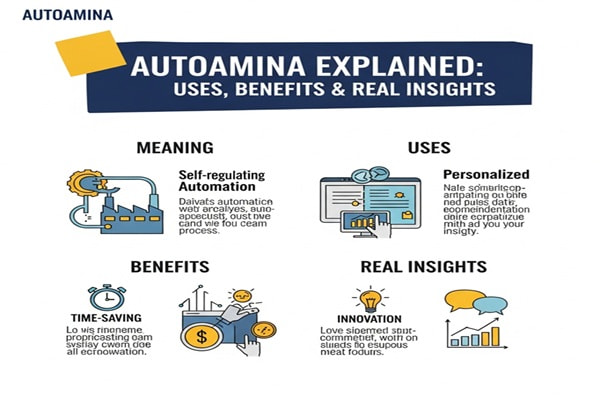
Here’s the simplest way I can put it: Autoamina revolves around self-regulation and smart automation, often tied to automotive platforms, adaptive systems, or tech that adjusts without constant babysitting.
Depending on context, people use Autoamina in two main ways:
-
As a digital automotive platform or ecosystem
-
As a concept representing self-adjusting, self-maintaining systems
Sounds broad? It is. But that flexibility explains why the term keeps spreading.
Ever noticed how the best ideas don’t stay in one lane?
Why Autoamina Is Getting Attention
Autoamina resonates because people feel tired of micromanaging everything.
We manage cars. We manage apps. We manage systems that should honestly manage themselves by now. Autoamina promises smarter balance, not more buttons to press.
From what I’ve seen, people gravitate toward it because it suggests:
-
Less manual effort
-
Smarter automation
-
Systems that “just work”
And let’s be real who doesn’t want that?
Autoamina in the Automotive World
In automotive discussions, Autoamina often describes a digital hub or platform that helps users explore vehicles, compare options, and make informed decisions without drowning in data.
Instead of bouncing between ten tabs, Autoamina-style platforms aim to centralize everything.
That includes:
-
Vehicle comparisons
-
Feature breakdowns
-
Pricing insights
-
User-friendly navigation
I’ve tested platforms like this before, and when they work well, they save hours. When they don’t… well, let’s not talk about that :/
Why This Matters to Real People
Car buying already stresses people out. Autoamina reduces friction by guiding users logically instead of overwhelming them.
IMO, any tool that lowers stress during a car purchase deserves attention.
Autoamina as a Self-Regulation Concept
Now let’s zoom out.
The Bigger Idea Behind Autoamina
Outside automotive branding, Autoamina represents systems that regulate themselves. Think balance without constant interference.
You see this idea everywhere:
-
In biology
-
In technology
-
In wellness concepts
The system senses change and responds automatically. No panic. No chaos.
Sounds ideal, right?
Autoamina and Technology
Adaptive Systems at Work
In tech, Autoamina aligns closely with:
-
Smart software
-
Adaptive algorithms
-
AI-driven adjustments
These systems don’t wait for commands. They respond in real time.
For example:
-
Software that optimizes performance automatically
-
Platforms that adjust user experience based on behavior
-
Tools that self-correct before issues escalate
When tech behaves this way, users feel supported instead of managed.
Autoamina and Human Balance
Here’s the part people don’t expect.
The Human Side of Autoamina
Some writers connect Autoamina to mental and physical balance. The idea mirrors how the body regulates itself heart rate, temperature, energy levels.
When systems mimic human self-regulation, they feel intuitive.
Ever noticed how the best tools feel invisible? That’s Autoamina energy.
Why Autoamina Feels Modern
Autoamina fits modern expectations perfectly.
People want:
-
Fewer instructions
-
Less friction
-
Smarter systems
Nobody wants another manual. Autoamina promises intuition over instruction.
That mindset explains why the term keeps surfacing across industries.
Autoamina vs Traditional Automation
Let’s clear up confusion.
Traditional Automation
Traditional automation:
-
Follows strict rules
-
Breaks when conditions change
-
Needs frequent updates
It works… until it doesn’t.
Autoamina-Style Automation
Autoamina focuses on:
-
Adaptation
-
Balance
-
Continuous adjustment
Instead of rigid commands, it responds dynamically.
That difference matters more than people realize.
Also Read : Simbramento Explained: Meaning, Culture, Emotion & Modern Use
Key Features Commonly Linked to Autoamina
While implementations vary, Autoamina-style systems usually share traits.
Common Autoamina Characteristics:
-
Self-adjusting behavior
-
Minimal user intervention
-
Data-driven responses
-
Focus on balance and efficiency
When platforms hit these points, users feel the difference immediately.
Personal Take: Why I Like the Autoamina Idea
I like concepts that respect human attention.
Autoamina doesn’t demand constant input. It doesn’t nag. It quietly adapts. That alone earns points with me.
I’ve used tools that claim automation but still need constant tweaking. Autoamina suggests maturity, not noise.
And honestly? Tech needs more maturity.
Where Autoamina Shows Up Online
You’ll see Autoamina mentioned across:
-
Automotive blogs
-
Tech innovation articles
-
Conceptual system design discussions
The term acts like a flexible label. Writers adapt it to fit their niche, but the core idea stays intact.
That adaptability gives it staying power.
Is Autoamina a Brand or a Concept?
Here’s the honest answer: it’s both.
Some use Autoamina as:
-
A platform name
-
A project identity
-
A conceptual framework
That dual nature explains why definitions feel fluid. Context matters.
Ever notice how strong ideas refuse to stay boxed?
SEO Perspective: Why Autoamina Performs Well
From an SEO standpoint, Autoamina works because people search it out of curiosity.
High-intent queries often include:
-
Autoamina meaning
-
Autoamina platform
-
What is Autoamina
-
Autoamina automotive
The keyword sparks exploration, not just answers.
Search engines love that.
Misconceptions About Autoamina
Let’s squash a few myths.
“It’s Just Another Buzzword”
Not really. The idea reflects real system design trends.
“It Only Applies to Cars”
Wrong. Automotive use just made it visible first.
“It’s Too Vague to Matter”
Flexibility doesn’t equal uselessness. It often equals longevity.
How Autoamina Fits the Future
As systems grow smarter, Autoamina-style thinking will become standard.
People won’t tolerate clunky tools much longer. They’ll expect:
-
Systems that learn
-
Tools that adapt
-
Platforms that balance performance automatically
Autoamina points directly at that future.
Should You Care About Autoamina?
If you care about:
-
Smarter tech
-
Better user experiences
-
Reduced mental load
Then yes, Autoamina deserves your attention.
Even if the term evolves, the concept won’t disappear.
How to Spot Autoamina in Action
You’re likely dealing with Autoamina-style design if:
-
The system adjusts without asking
-
Performance improves over time
-
You think about the tool less, not more
That’s the goal.
Final Thoughts on Autoamina
Autoamina isn’t loud. It doesn’t scream innovation. It quietly promises balance, adaptation, and smarter systems.
Whether you see it as:
-
An automotive platform
-
A self-regulating tech concept
-
A design philosophy
It all circles back to the same idea systems should work for people, not the other way around.