
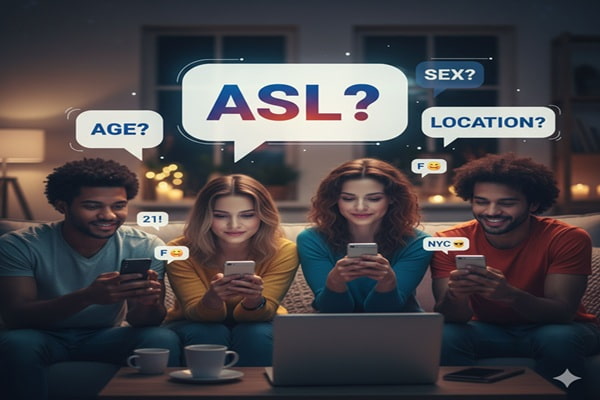
If you’ve ever seen someone type ASL? in a message and felt unsure how to respond, you’re not alone. ASL is one of those internet terms that has been around for years, yet it still shows up in modern conversations especially in chats, DMs, and online communities.
People search for the meaning of ASL because it can feel confusing or even uncomfortable if you don’t know the intent behind it. Sometimes it’s harmless curiosity, and other times it raises questions about privacy or safety. Understanding what ASL really means helps you decide how or if you want to reply.
In this guide, we’ll explain the ASL meaning in slang in simple words. You’ll learn what it stands for, how it’s used today, see real examples, and understand common misunderstandings so you can handle it confidently.
Contents
- 1 What Does ASL Mean in Slang?
- 2 The Basic Meaning of ASL in Text
- 3 Where ASL Is Commonly Used
- 4 Is ASL Still Used Today?
- 5 ASL Meaning Based on Context
- 6 Is ASL Safe to Answer?
- 7 Examples of ASL in Text and Chat
- 8 How People Use ASL in Real Life
- 9 Tips for Responding to ASL
- 10 Common Mistakes People Make
- 11 Related Slang and Chat Terms
- 12 Frequently Asked Questions
- 13 Conclusion
What Does ASL Mean in Slang?
ASL stands for Age, Sex, Location.
It’s a question used in chats to learn basic details.
It became popular in early online chat rooms.
People used it to get to know strangers quickly.
Today, it’s still used, but less frequently.
ASL is mainly a quick way to ask personal basics.
The Basic Meaning of ASL in Text
ASL is usually written as a question.
It asks three things at once.
It’s informal and casual.
It’s mostly used between strangers.
The tone depends on context.
In short, ASL is a shortcut for introductions.
Where ASL Is Commonly Used
ASL appears in online chats.
It’s common in gaming chats and forums.
Some people use it in social media DMs.
It’s rare in everyday texting with friends.
It’s not used in professional settings.
Its use is more niche today than before.
Is ASL Still Used Today?
Yes, but not as much as before.
It was very common in early internet days.
Now, people prefer casual conversation first.
Some still use it out of habit.
Others use it jokingly or ironically.
ASL has become more context-sensitive over time.
ASL Meaning Based on Context
Context changes how ASL feels.
In friendly chats, it may seem normal.
In random DMs, it can feel intrusive.
Tone and timing matter a lot.
Who asks it makes a difference.
Understanding context helps you respond wisely.
Is ASL Safe to Answer?
It depends on the situation.
Sharing age and location can affect privacy.
You don’t have to answer fully.
You can give general or vague replies.
It’s okay to ignore it if uncomfortable.
Your comfort and safety come first.
Examples of ASL in Text and Chat
-
“Hi there, ASL?”
-
“ASL before we keep chatting?”
-
“ASL? Just curious.”
-
“ASL lol?”
-
“People still ask ASL?”
-
“ASL? Or should we just talk?”
-
“Not into ASL questions.”
-
“ASL old school internet vibes.”
-
“Why do people still say ASL?”
-
“ASL? That’s random.”
-
“They asked ASL right away.”
-
“ASL feels outdated now.”
-
“ASL but no pressure.”
-
“ASL? Depends who’s asking.”
-
“He dropped ASL in the chat.”
-
“ASL is kind of invasive.”
-
“ASL? Let’s slow down.”
-
“I ignored the ASL message.”
-
“ASL used to be everywhere.”
-
“ASL questions make me cautious.”
How People Use ASL in Real Life
Most people see ASL online only.
It’s used in chats with strangers.
Some use it to break the ice.
Others avoid it completely.
It’s rarely used face-to-face.
ASL remains an internet-specific term.
Also Read : WTW Meaning in Text: What It Stands for and How to Use It
Tips for Responding to ASL
Only share what you’re comfortable with.
You can give partial answers.
It’s okay to decline politely.
Trust your instincts.
Don’t feel pressured to reply.
You control your personal information.
Common Mistakes People Make
Thinking ASL is always harmless.
Sharing too much information.
Assuming everyone expects an answer.
Using ASL in the wrong setting.
Forgetting about online safety.
Awareness helps avoid discomfort.
Related Slang and Chat Terms
“WYD” asks what someone is doing.
“A/S/L” is the older format.
“HMU” invites conversation.
“DM?” suggests private chat.
All depend on casual context.
These terms shape online communication.
Frequently Asked Questions
What does ASL mean in slang?
It means Age, Sex, Location.
Is ASL outdated?
It’s less common but still used.
Is ASL rude to ask?
It can feel intrusive, depending on context.
Should I answer ASL questions?
Only if you feel comfortable.
Is ASL safe for teens?
Caution is advised due to privacy concerns.
Conclusion
The ASL meaning in slang is simple, but how it feels depends on context. While it stands for Age, Sex, Location, its use today is more sensitive than in the past. Some people see it as harmless curiosity, while others view it as invasive.
Knowing what ASL means helps you decide how to respond or whether to respond at all. Trust your comfort level, protect your privacy, and remember that you’re never obligated to share personal details in online conversations.