
Contents
- 1 Introduction
- 2 What Does WBU Mean in Text?
- 3 Where Did WBU Come From?
- 4 WBU vs HBU: What Is the Difference?
- 5 How WBU Is Used Across Different Platforms
- 6 20 Real-World Examples of WBU Used in Text
- 7 How to Reply When Someone Sends You WBU
- 8 How People Use WBU in Real Life
- 9 Tips for Using WBU Correctly
- 10 Common Mistakes People Make with WBU
- 11 Related Abbreviations and Topics to Know
- 12 FAQ
- 13 Conclusion
Introduction
Have you ever received a text that ended with “WBU” and found yourself staring at those three letters wondering what they mean?
You are not alone. WBU is one of the most commonly used abbreviations in text messaging and online chat, yet a surprising number of people still encounter it without knowing exactly what it stands for or how to respond to it. Whether you got it from a friend, saw it in a Snapchat message, or spotted it in an Instagram DM, this guide will explain everything you need to know in plain, simple language.
People search for WBU meaning because texting abbreviations have become a language of their own and keeping up with them is genuinely useful. Using or replying to abbreviations incorrectly can create awkward misunderstandings or make a conversation feel disconnected. By the end of this guide you will know exactly what WBU means, where it came from, how to use it correctly, and how to reply when someone sends it to you.
What Does WBU Mean in Text?
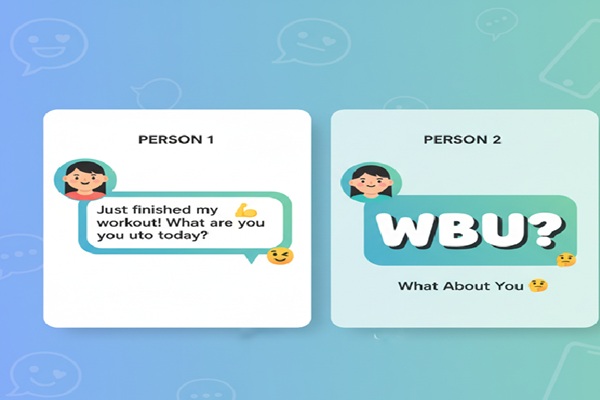
WBU stands for What About You.
It is a quick, casual way of turning a question or statement back toward the person you are talking to. When someone sends you WBU, they are essentially asking for your thoughts, opinion, update, or situation in response to something they just shared or asked.
It works the same way as saying “what about you?” in a spoken conversation. The only difference is that it is shortened into three letters to make typing faster and the conversation flow more naturally in a digital format.
WBU is almost always used at the end of a message. Someone might share how their day went, what they are doing, or how they are feeling, and then add WBU to invite you to share the same. It is a conversation-keeping tool as much as it is a question.
The abbreviation is friendly, casual, and low-pressure. It signals that the person is genuinely interested in what you have going on and wants to keep the exchange going.
Where Did WBU Come From?
WBU grew out of the era of SMS text messaging when character limits and slow typing on number keypads made abbreviations a practical necessity.
During the early 2000s, texters developed a shorthand language to communicate faster and more efficiently. Full phrases got compressed into two or three letter codes that everyone eventually learned to understand. WBU followed the same pattern as other abbreviations from that era like LOL, BRB, HBU, and IDK.
As smartphones replaced older phones and typing became easier, many of these abbreviations could have faded away. Instead they became embedded in digital communication culture and survived the transition to touchscreen keyboards, messaging apps, and social media platforms.
WBU specifically persisted because the phrase it represents, what about you, is something people say constantly in conversation. Shortening it to three letters felt natural and saved just enough effort to be worth doing.
By the mid 2010s WBU was a standard part of texting vocabulary among teenagers and young adults. By 2020 and beyond it had spread across age groups and platforms, appearing in everything from casual text messages to Snapchat streaks to Twitter DMs.
WBU vs HBU: What Is the Difference?
WBU and HBU are two abbreviations that are very closely related and often used interchangeably, which causes confusion for a lot of people.
HBU stands for How About You. WBU stands for What About You. In everyday conversation the two phrases mean almost exactly the same thing and are used in almost identical situations.
The subtle difference is that How About You can carry a slightly softer or more inviting tone in some contexts, while What About You can feel slightly more direct. In practice, however, most people do not think about this distinction at all and switch between WBU and HBU freely depending on habit or personal preference.
If someone sends you WBU or HBU, you can reply the same way to either. Both are asking you to share your side of whatever topic is being discussed. Both are friendly and casual. Both are equally common across different platforms and age groups.
How WBU Is Used Across Different Platforms
WBU appears across virtually every digital communication platform but the way it shows up and the contexts it appears in vary slightly depending on where you are.
WBU in Text Messages
In standard text messages, WBU is most commonly found at the end of a message after someone shares something about themselves. It is the digital equivalent of finishing a sentence and then looking up to make eye contact with the other person to show you want to hear their response.
WBU on Snapchat
On Snapchat, WBU appears frequently in streaks and daily check-in messages. Someone might snap a photo of what they are doing and add “WBU” as the caption to ask what the other person is up to. It keeps the streak going while actually initiating a real exchange.
WBU on Instagram
In Instagram DMs, WBU is used similarly to text messages. Someone might reply to a story or start a conversation with a brief update about themselves followed by WBU to get the other person talking.
WBU on Twitter and X
On Twitter and X, WBU appears less frequently because the platform is more public and less conversational in a one-on-one sense. When it does appear it is usually in DMs or in reply threads where people are having back-and-forth exchanges.
WBU in Group Chats
In group chats, WBU is commonly used to check in with multiple people at once. Saying “had a rough day at work, WBU all” is a quick way to open up a group conversation and invite everyone to share how their day went.
20 Real-World Examples of WBU Used in Text
- “Just got home from the gym, WBU?”
- “I am thinking of ordering pizza tonight WBU?”
- “Honestly my day was pretty good WBU?”
- “I have been really tired lately, WBU?”
- “Just finished watching that new series, WBU? Have you seen it?”
- “Staying in this weekend, WBU?”
- “I am feeling a bit stressed about exams, WBU?”
- “Just woke up, WBU?”
- “I am not really sure what to do tonight, WBU?”
- “Honestly I think the movie was overrated, WBU?”
- “Work has been crazy this week, WBU?”
- “I have been craving sushi all day, WBU?”
- “Nothing much going on here, WBU?”
- “I am leaning toward the blue one, WBU?”
- “Just got back from a long walk, feeling better now, WBU?”
- “I miss hanging out with everyone, WBU?”
- “I am doing alright, just a bit bored honestly, WBU?”
- “Starting to get into that new show everyone is talking about, WBU?”
- “Thinking about going to the event on Saturday, WBU?”
- “I feel like this year has gone by so fast, WBU?”
How to Reply When Someone Sends You WBU
Replying to WBU is simple. The person is asking about you, so all you need to do is share whatever is relevant to the conversation.
If they asked about your day, tell them about your day. If they shared their opinion and added WBU, give your own opinion. If they told you what they are doing and asked WBU, tell them what you are up to. Match the length and energy of their message and mirror the casual tone.
You can also add WBU back at the end of your reply if you want to keep the exchange going on a new topic. This creates a natural back-and-forth rhythm that keeps conversations flowing without either person having to work too hard to sustain them.
Short, honest replies work best. You do not need to write a paragraph in response to a WBU. A few sentences that genuinely answer what they asked is the perfect response every time.
How People Use WBU in Real Life
WBU is one of the most practical conversation tools in digital communication. It serves a clear and specific purpose in almost every context it appears in.
Friends use it to check in on each other during the day. A quick “just had lunch, WBU” is a low-effort way to stay connected without needing to send a long message or start a formal conversation.
Couples use WBU constantly to keep small daily exchanges going throughout the day. It creates a gentle rhythm of sharing without putting pressure on either person to have something significant to say.
Classmates and colleagues use it when discussing shared topics like assignments, work projects, or upcoming plans. Asking for someone else’s take with WBU shows you are interested in their perspective without demanding a long explanation.
On social media, WBU is used to invite followers or friends into a broader conversation. Posting an opinion or update and adding WBU opens the door for others to comment with their own thoughts.
In new friendships or early-stage relationships, WBU is a helpful and friendly way to keep conversations going without the pressure of always having to come up with the next topic. It naturally passes the conversation back to the other person.
Also Read : What Does Bricked Up Mean in Slang? The Complete Guide for 2026
Tips for Using WBU Correctly
Use it after sharing something first. WBU works best when you have already given the other person something to respond to. Share your update, opinion, or question and then add WBU to invite their response.
Match the tone of your conversation. WBU is casual and informal. It fits perfectly in friendly texts, social media DMs, and group chats. It does not belong in professional emails, formal messages, or work communications.
Do not use it as an opener with no context. Starting a conversation with just “WBU” without any preceding message can feel confusing or abrupt. It works much better as a follow-up than as an opening line.
Keep your reply to WBU natural and genuine. When someone sends you WBU, they want to hear from you. A real, honest answer, even a short one, is far better than a deflection or a non-answer.
Use it to keep stalled conversations going. If a conversation has gone quiet and you want to restart it, sharing something about yourself followed by WBU is one of the smoothest and least pressured ways to do it.
Common Mistakes People Make with WBU
Using it in professional settings. WBU is strictly casual language. Sending it in a work email, a professional Slack message, or any formal communication will come across as unprofessional and might confuse colleagues who are not familiar with texting abbreviations.
Confusing WBU with WYD. WYD stands for What You Doing and asks what someone is currently doing right now. WBU is broader and asks for the person’s thoughts, feelings, or situation in response to whatever was just discussed. They are related but not the same.
Ignoring it in a reply. When someone sends you WBU, leaving it unanswered is one of the fastest ways to make a conversation feel one-sided. Even a brief reply shows you are engaged and interested in the exchange.
Overusing it in every message. Adding WBU to the end of every single thing you send can start to feel robotic or like you are not really listening. Use it when it genuinely fits rather than as an automatic habit.
Assuming it means something more complex. Some people see WBU and wonder if there is a deeper meaning or a secondary interpretation. There is not. WBU means What About You and nothing else. It is straightforward and simple every time.
Related Abbreviations and Topics to Know
HBU stands for How About You and is used in almost identical situations to WBU. The two are interchangeable for most people and knowing one means you essentially know both.
NGL stands for Not Gonna Lie and is often used just before sharing an honest opinion. It frequently appears in the same casual texting conversations where WBU shows up.
IMO stands for In My Opinion and is used before sharing a personal perspective. Like WBU it is a conversational tool that keeps exchanges feeling balanced and two-sided.
WYD stands for What You Doing and is a more specific question about what someone is doing at that exact moment. It is more present-tense and action-focused than WBU.
IKR stands for I Know Right and is used to express agreement or shared feeling. It often appears as a response in conversations where WBU helped open up a topic.
WDYT stands for What Do You Think and is a slightly more direct way of asking for someone’s opinion. It overlaps with WBU in situations where someone wants feedback on a specific topic.
LMK stands for Let Me Know and is another common texting abbreviation that often appears in conversations alongside WBU, especially when making plans or waiting on someone’s decision.
TBH stands for To Be Honest and is used before sharing a candid thought or feeling. It pairs naturally with WBU in exchanges where honesty and openness are the tone.
FAQ
What does WBU mean in a text message?
WBU stands for What About You. It is used to invite the other person to share their thoughts, feelings, or situation after you have shared yours. It is a friendly, casual way of keeping a conversation balanced and two-sided.
Is WBU the same as HBU?
Almost exactly. HBU stands for How About You and WBU stands for What About You. Both are used in the same situations and carry the same meaning. Most people use them interchangeably without any meaningful difference.
How should I reply when someone sends me WBU?
Simply answer the question in context. If they shared how their day went, share how yours went. If they gave an opinion, give yours. Keep it natural, genuine, and roughly match the length and tone of their message.
Yes. WBU is widely used on Snapchat, Instagram DMs, Twitter, and group chats in addition to standard text messages. It appears anywhere people have casual digital conversations.
Is WBU appropriate to use with adults or older people?
It depends on the relationship. Among friends and family who are comfortable with texting abbreviations, WBU is perfectly fine regardless of age. In more formal relationships or with people who prefer full sentences, spelling out What About You is the safer choice.
Does WBU have any other meanings?
In rare cases WBU has been used to stand for other phrases in specific contexts but these are uncommon and not widely recognized. In everyday texting and social media use, WBU universally means What About You and that is the only meaning you need to know.
Conclusion
WBU is one of the simplest and most useful abbreviations in modern digital communication. It stands for What About You, it takes less than a second to type, and it does something genuinely valuable in a conversation by showing interest in the other person and keeping the exchange going naturally without any pressure or awkwardness.
Whether you are texting a close friend, checking in with a classmate, or keeping a Snapchat streak alive, WBU is a small but powerful tool that makes digital conversations feel more like real ones. Now that you know exactly what it means, how to use it, and how to reply when someone sends it to you, you are fully equipped to use it with complete confidence every time it comes up.